Blender Lab Q1 Report Engine Overview
During the first quarter of 2026, the lab evaluated rapid geometry generation techniques across next-generation graphics pipelines. Our research team focused on breaking through traditional topology computation bottlenecks by merging physical clay sculpting metaphors with non-destructive procedural solvers. Engineers observed substantial throughput leaps when evaluating mesh deformation calculations directly on hardware-accelerated streaming multiprocessors.
Procedural Computation and Geometry Engine
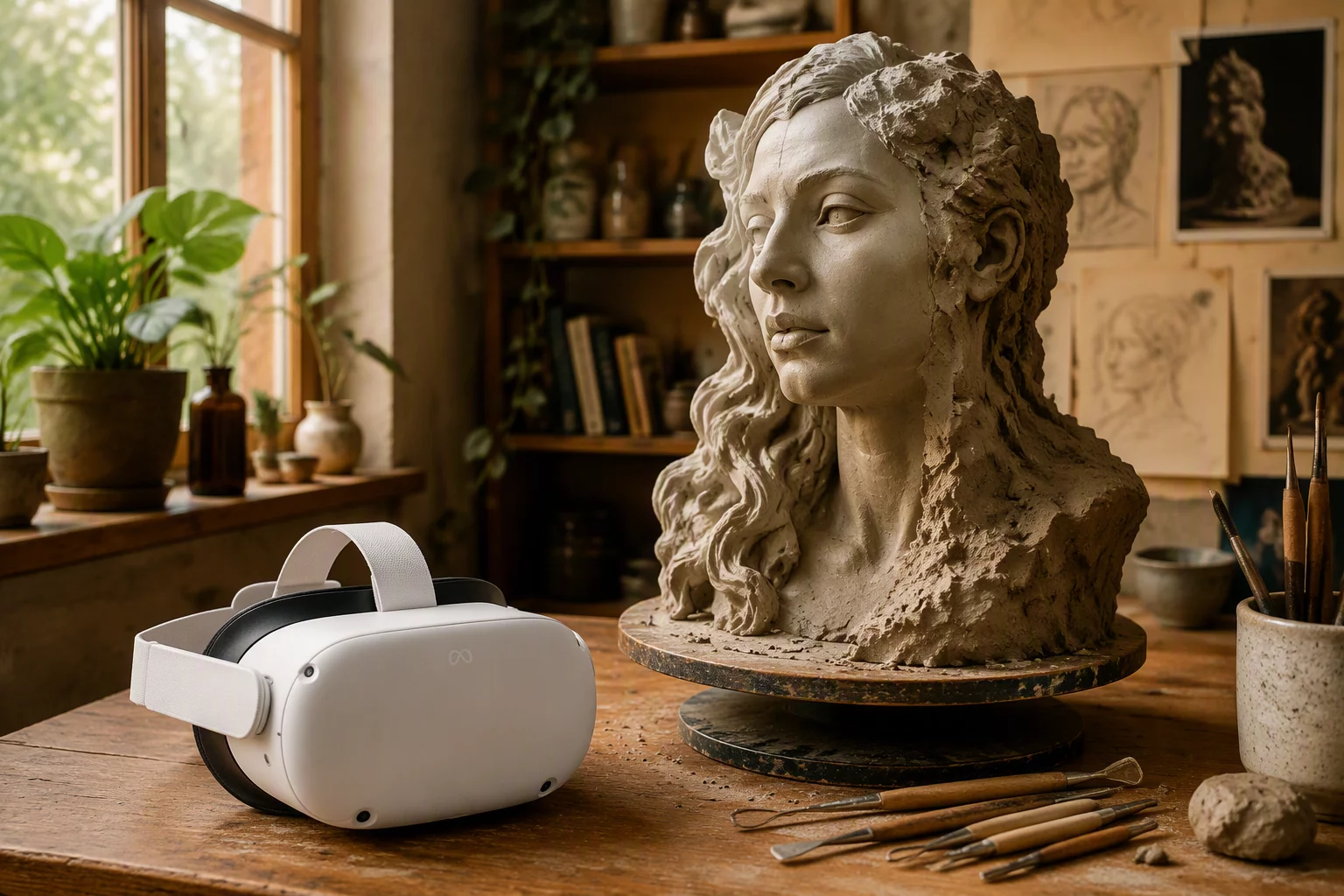
The core breakthrough in Q1 centers around the experimental Clay Pencil architecture. Instead of processing dense vertex lattices through conventional destructive sculpt brushes, the system generates continuous volumetric displacement fields. Artists and industrial modelers interact with fluid-like tactile feedback while underlying routines generate clean, quad-dominant surface shells suitable for immediate engineering manufacturing or interactive spatial engines.
All routines are pre-compiled for automated parallel processing across cloud nodes and local dedicated workstations.
Topology and Integration Matrix
- Integrated low-latency OpenXR spatial computation viewports for live spatial sculpting and direct headset telemetry.
- Adaptive volumetric displacement solvers ensuring deterministic quad surface extraction with zero non-manifold edges.
- Unified Vulkan memory pooling lowering GPU VRAM footprint during multi-million polygon viewport evaluations.
- Native bi-directional glTF 2.0 streaming pipeline preserving procedural shader hierarchies upon rapid export.
In addition to desktop pipelines, extensive stress testing under distributed cluster environments proved that mesh synchronization latency dropped below twelve milliseconds. This operational agility empowers collaborative design teams to review complex spatial assemblies concurrently without sacrificing precision CAD surface tolerances.
Technical Discussion & Feedback
Verified engineering reviews and release telemetry notes.
Clay Pencil is a game changer.
Submit Technical Comment
Share node setup telemetry or report compatibility metrics with the team.